Discover why Ekamkrit chose handloom over power looms — fair wages, traceable weavers, and fabric that lasts decades, not seasons.
Every brand has an origin story. Ours starts on a loom, not in a boardroom.
What “Ekamkrit” Means
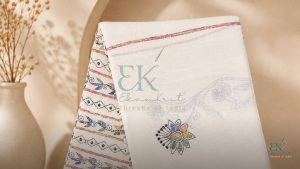
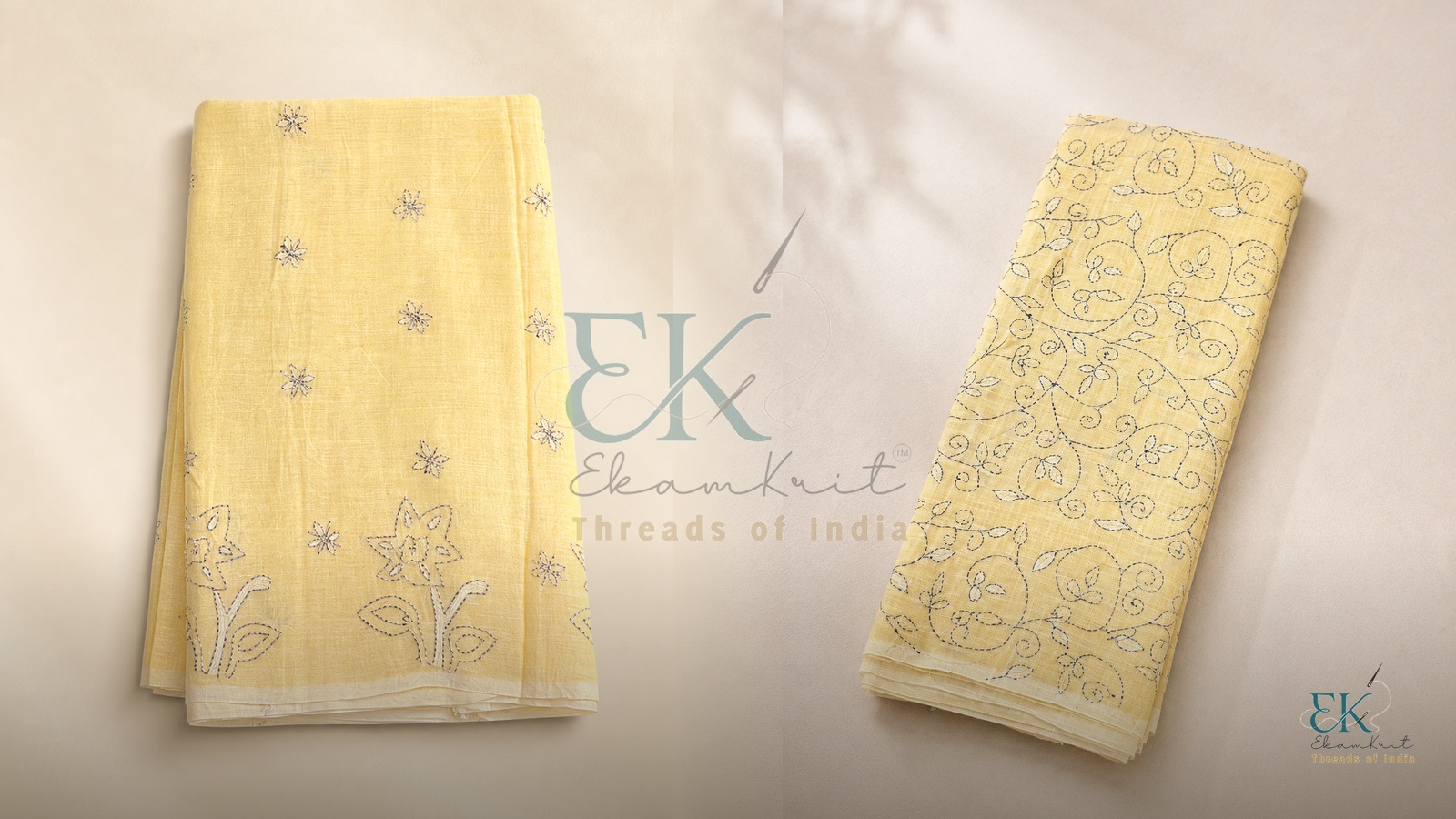
Ekamkrit takes its name from two Sanskrit words: ekam, meaning one, and krit, meaning made or created. Together, they describe something we believe is quietly disappearing from Indian fashion — a garment made as one continuous act, by one set of hands, from raw yarn to finished drape. Skilled weavers carry each piece through, start to finish, rather than passing it across a dozen machines and a dozen shifts. They know exactly what they’re making, and why.
A Craft With Many Voices
Handloom weaving is one of the oldest continuous crafts in the world. India is home to the largest number of handloom weavers on the planet — a workforce in the millions, spread across nearly every state. Each region carries its own distinct weaving vocabulary. Odisha has its Ikat. Bengal has Jamdani and Baluchari. Tamil Nadu has Kanjivaram. Madhya Pradesh has Chanderi and Maheshwari. Gujarat and Rajasthan have Bandhani and Patola. This isn’t a single craft. It’s dozens of parallel traditions, each refined over centuries.
A Fight Handloom Was Never Built For
For decades, handwoven textiles have had to compete on price and speed with power looms and industrial production. It’s a fight they were never built to win, because speed was never the point. A power loom can produce in an hour what might take a handloom weaver a full day. That comparison only matters if you believe speed is what you’re paying for. We don’t think it is.
We think you’re actually paying for texture no machine can replicate, a drape that holds up over decades instead of seasons, and — quietly but importantly — a livelihood for someone whose family has likely done this work for generations.
Changing the Question
We started Ekamkrit to change the terms of that conversation. Instead of asking “how fast can this be made,” we ask “how well can this be made, and how fairly can the person making it be paid for their time?” That single shift changes almost everything about how we operate: which weaving clusters we work with, how we price our pieces, and how much of our own content focuses on process rather than just product.
What “Handwoven” Actually Means to Us
We can trace every saree, stole, and fabric length we sell back to its region and, wherever possible, to the specific weaver or weaving cluster that made it. We’re not interested in “inspired by handloom” or “handloom-look” fabric. That distinction matters more than it might seem — power-loom imitations get sold under vague or misleading labelling far too often in the wider market. When we say handwoven, we mean it literally: made on a loom, by a person, using their hands and feet to operate it.
What’s Coming Next
Over the coming month, we’ll take you through our looms, our weaves, and the people behind them — from the resist-dyed patterns of Ikat to the sheer poetry of Jamdani, from the temple-motif silks of Kanjivaram to the humble, history-laden cotton of khadi. We’ll cover how to care for handloom so it lasts the decades it’s capable of lasting, how to style it for everyday life instead of reserving it for weddings and festivals, and why handwoven cloth is one of the more quietly meaningful choices available to anyone who shops for clothing.
What Ekamkrit Is Not
It’s also worth being upfront about what Ekamkrit isn’t. We’re not positioning ourselves as a charity, and we don’t think handloom needs that framing to be worth buying. Every piece we sell has to earn its place on genuine quality and design merit first. We hold ourselves to fair wages and traceable origins as a baseline, not as a favour we’re asking customers to do for us. We’d rather you buy an Ekamkrit piece because you genuinely love how it looks and feels — and simply appreciate, as a secondary benefit, that we made it the way we’ve described.
This is only day one. There’s a lot more thread to follow. Stay woven in with us.