The Story of Handloom Mul Cotton: Origin, Craft, and Identity
Every handwoven saree carries forward a living story of India’s textile heritage. Handloom Mul Cotton (historically known as Mulmul or fine Indian muslin) originated in the ancient weaving clusters of India, where skilled artisans mastered the art of spinning raw cotton into ultra-fine, breathable yarns.
Unlike mass-produced powerloom fabrics, a genuine handloom saree is woven manually on a traditional loom. Each piece is the result of ethical craftsmanship, patience, and truthful skill. When you choose a handwoven piece like EK 2606 from Ekamkrit – Threads of India, you are directly supporting generous, skilled Indian weavers and keeping a centuries-old craft tradition alive. It brings a fresh, contemporary perspective to classic, loyal endurance—giving you a garment that respects traditional patterns while fitting effortlessly into modern life.
Product Breakdown: Weave, Material, Threads, and Finish
To help everyday readers understand what makes this specific saree (EK 2606) unique, here is a clear factual check of its material, weave, and construction based directly on the piece shown:
- The Piece Material (Handloom Mul Cotton): Made from pure, finely spun handloom mul cotton. It is lightweight, airy, and grows softer with every wash, offering all-day comfort in warm and humid climates.
- Body & Color Identity: The main body of the saree features a plain weave in a warm lemon yellow (carrying a rich, earthy golden-mustard undertone in natural light) paired with a clean, simple blue contrast border.
- The Weave Pattern & Threads Used: While the rack in the studio also displays checked and striped handloom variations in the opening shot, this featured unique piece (EK 2606) focuses on a smooth plain body contrasted by a textured horizontal weave on the pallu. The pallu is woven with silver-white threads across a greenish-blue base, creating fine horizontal lines.
- The Surface Finish: The interplay of the cotton base and the silver-white threads gives the fabric a beautiful shine and subtle shimmer—never loud or artificial, just a graceful, natural sheen when it catches the light.
- Signature Features & Detailing: The edge of the pallu is finished with hand-tied blue tassels (matching the contrast border), adding movement and a modern, polished edge to the traditional weave.
Understanding the Saree Terminology (Simple Guide)
If you are new to handloom sarees, here is what the standard technical terms in the video mean in plain language:
- Handloom: Fabric woven by hand on a loom without electricity, meaning every thread is guided by a human artisan.
- Mul Cotton: A super-fine, soft, and breathable variety of 100% cotton known for its feather-light feel.
- Contrast Border: The edges running along the length of the saree are dyed a completely different color (bright blue) from the main body (lemon yellow) to frame the drape.
- Pallu: The decorative end-piece of the saree that drapes over the shoulder.
- Horizontal Weaving: A technique where weft threads (in this case, silver-white threads) are woven horizontally across the width of the pallu to create a striped, shimmering texture.
- Single Pleat Open Pallu Drape: Instead of folding the shoulder part of the saree into narrow, pinned pleats, you let the pallu fall open and loose over your arm so the full horizontal weave and blue tassels are clearly visible.
Step-by-Step Guide to the Video Voiceover (Word-by-Word Breakdown)
Below is the complete, exact transcript from the video, broken down line by line without leaving a single word out, paired with a factual explanation of what is happening on screen:
- “Hi, hello.” (00:01)
- The Information: A warm, welcoming greeting as the camera pans across a rack of neatly hung Ekamkrit handloom sarees (including grey checked patterns and yellow/blue borders) at the Prepleats by Iswarya studio.
- “Today we are introducing a beautiful saree in a new pattern, gorgeous mul cotton saree.” (00:03 – 00:08)
- The Information: The presenter introduces the featured product—code EK 2606—folded neatly on the counter, showing off its soft mul cotton texture.
- “The lemon yellow plain body paired with a simple blue contrast border makes the saree stand out with its unique and refreshing color combination.” (00:08 – 00:16)
- The Information: A close-up inspection of the fabric shows the smooth, unpatterned yellow body set against a crisp, solid blue border, offering a bright, eye-catching contrast.
- “The pallu features horizontal weaving with silver white threads, adding a beautiful shine and subtle shimmer to the saree.” (00:17 – 00:23)
- The Information: The presenter models the saree draped over her shoulder, demonstrating how the silver-white threads woven horizontally across the pallu catch the room’s light to create a gentle metallic glow.
- “Especially when styled with a single pleat open pallu drape, the beauty and elegance of the pallu can be highlighted even more.” (00:24 – 00:31)
- The Information: She lifts and spreads the pallu wide with her hand, proving that letting the pallu hang open (rather than pinning it into tight pleats) is the best way to display the intricate horizontal threadwork.
- “As always, being from Ekamkrit brand, this saree brings together a premium feel, comfort and style.” (00:31 – 00:37)
- The Information: This highlights the core identity of the Ekamkrit (Threads of India) label—combining high-grade raw cotton with artisan weaving so the wearer gets luxury comfort alongside everyday wearability.
- “The beautiful blue tassels add an extra touch of elegance making this trendy saree even more special.” (00:37 – 00:43)
- The Information: She holds up the edge of the pallu to showcase the thick, neatly bunched blue thread tassels that give this traditional weave a fresh, contemporary finish.
- “If you love this handloom mul cotton saree, you can purchase it online or visit our studio.” (00:43 – 00:49)
- The Information: A direct buying guide for customers, showing a close-up of the fabric’s fine weave while letting buyers know both digital and in-person shopping options are available.
- “Our shop located in front of Sri Dharma Shastha Temple, Shaktikulangara, Kollam.” (00:49 – 00:53)
- The Information: The exact physical address landmark in Kollam, Kerala, so local buyers can easily find the Prepleats by Iswarya studio to touch and check the handloom quality in person.
- “That’s all about today’s saree talk. See you soon, tata.” (00:53 – 00:57)
- The Information: A friendly, natural sign-off concluding the product showcase.
Why This Saree Belongs in Your Wardrobe (And How to Style It)
If you are wondering why a handloom mul cotton saree is worth investing in, consider these practical reasons and styling tips:
- Unmatched All-Day Breathability: Synthetic sarees trap heat, whereas pure handloom mul cotton lets your skin breathe. Whether you are at the office for eight hours, attending a morning temple visit, or hosting a family gathering, it feels weightless.
- Effortless Transition from Work to Occasion: The plain lemon-yellow body keeps it grounded and professional for daytime wear, while the silver-white shimmer on the pallu gives it just enough festive grace for small events and evening get-togethers.
- Drape It Open for Maximum Impact: Follow the video’s tip and wear it in a single-pleat open pallu style. Because mul cotton naturally hugs the contours of the body without puffing up, leaving the pallu open is completely manageable and puts the silver-white weave and blue tassels front and center.
- Blouse & Jewelry Pairing:
- Pair it with a solid royal blue blouse to match the border, or wear a printed Kalamkari/Ajrakh blouse (just like the presenter wears in the video) for an artistic, earthy aesthetic.
- Complete the look with oxidized silver earrings or simple silver bangles to echo the silver-white threads in the pallu.
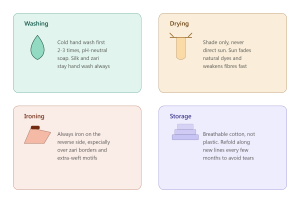
- A Piece of Ethical Luxury: Owning a handloom saree means owning a piece that won’t go out of style next season. With proper gentle hand-washing, mul cotton lasts for years, becoming softer and more comfortable every time you wear it.
Where to Find It:
Look for product code EK 2606 online through Prepleats by Iswarya / Ekamkrit (Threads of India), or visit their studio directly in front of the Sri Dharma Shastha Temple, Shaktikulangara, Kollam.