

A handwoven textile is an investment piece. Like most investments, it rewards a little consistent care with a much longer, better-looking life. Here’s how to actually take care of one.
Washing
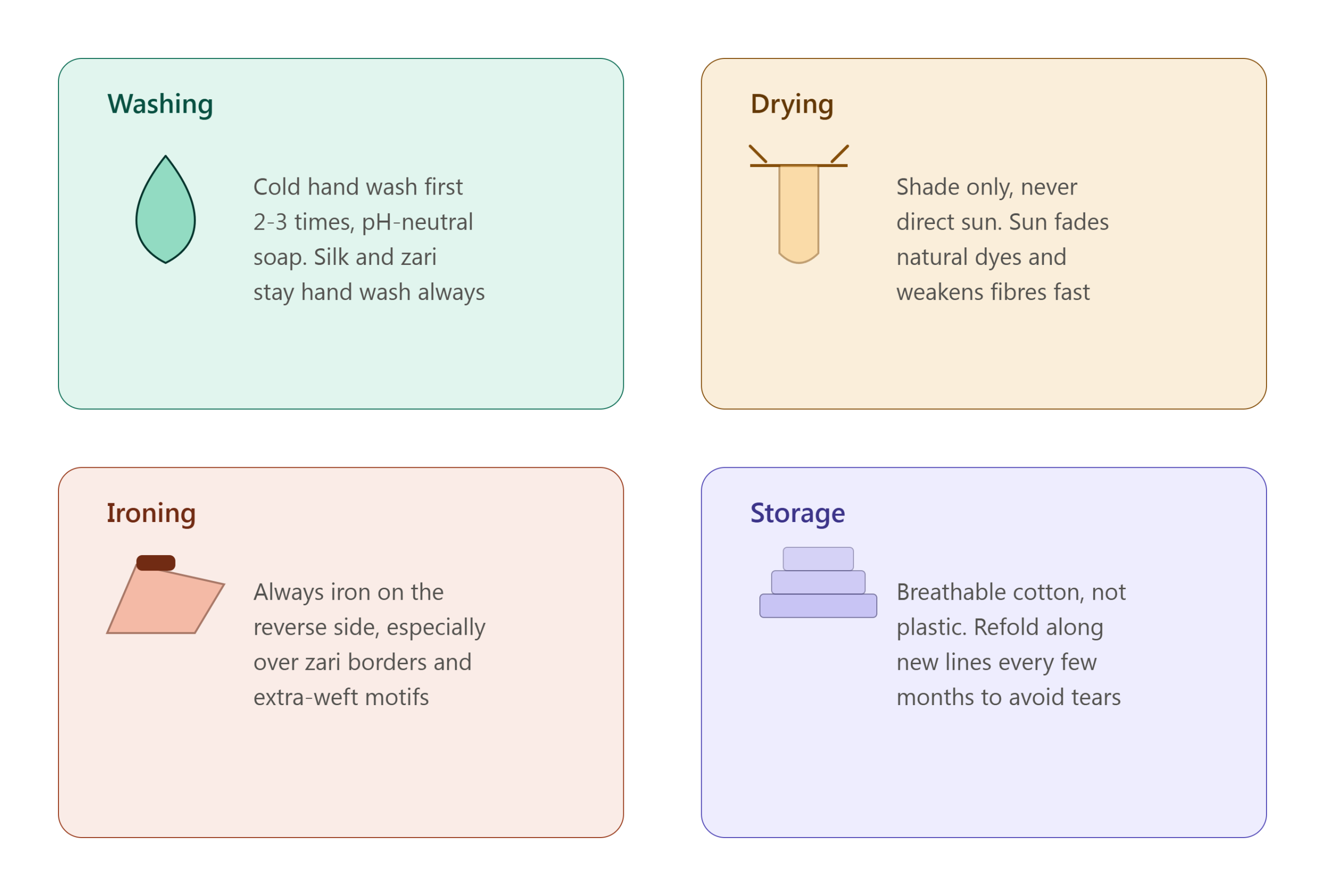
For the first two or three washes, hand wash handloom cotton and silk in cold water using a mild, pH-neutral detergent. This step matters most for naturally dyed pieces — a gentler wash helps set any residual dye and significantly reduces the risk of colour bleeding onto other fabrics.
After these initial washes, you can usually machine wash most handloom cotton pieces gently on a delicate cycle, ideally inside a mesh laundry bag for extra protection. Keep hand washing or professionally dry cleaning silk, zari-work, and heavily embellished pieces, though — machine agitation can damage both silk fibres and metallic thread work.
Drying
Always dry handloom in shade, ideally indoors near an open window or on a covered outdoor line. Avoid direct, harsh sunlight. Direct sun fades natural dyes considerably faster than synthetic ones, and prolonged exposure gradually weakens natural fibres, making the fabric more prone to tearing at stress points.
Ironing
Iron on the reverse side of the fabric wherever possible, particularly over zari borders, embroidered sections, and any areas with extra-weft motifs (as in Jamdani or Baluchari pieces). This protects delicate metallic threads from direct heat, which can flatten, discolour, or even melt certain zari finishes at high temperatures.
Storage
Fold your handloom pieces in breathable cotton or muslin cloth rather than sealing them in plastic bags. Plastic traps moisture and can encourage mildew or musty odours over time, especially in humid climates.
If you’re storing a saree or piece for an extended period — a season or longer — refold it along slightly different lines every few months. This simple habit prevents the fabric from developing permanent, weakened crease lines. Over years, those old fold lines can actually cause the fabric to tear.
A Few Don’ts Worth Calling Out
Don’t apply perfume or deodorant directly onto handloom fabric — alcohol-based products can cause localised discolouration, particularly on silk. Don’t store handloom pieces near direct heat sources, like a sunny windowsill or above a radiator. And don’t ignore small snags or loose threads. Catch and secure a loose thread early, and it’s a five-minute fix; leave it alone, and it can unravel into a much larger repair.
Before It Even Reaches the Laundry
Think about how you handle a handloom piece immediately after wearing it, before it reaches the laundry stage. Hang a worn saree or kurta on a proper wide hanger for a few hours to air out, rather than folding it away while still slightly warm from wear. This helps prevent musty odours from setting in and gives minor wrinkles a chance to relax naturally before storage.
It’s a small habit, but it meaningfully reduces how often a piece needs washing — itself one of the simplest ways to extend a handwoven textile’s working life.
The Payoff
A little consistent care goes a genuinely long way with handloom. Treated well, a good handwoven saree isn’t really a five-year purchase, the way a lot of contemporary fashion is designed to be. It’s closer to a fifteen or twenty-year one — the kind of piece you eventually hand down to someone else rather than replace. That’s exactly the relationship we think clothing should have with the people who wear it.